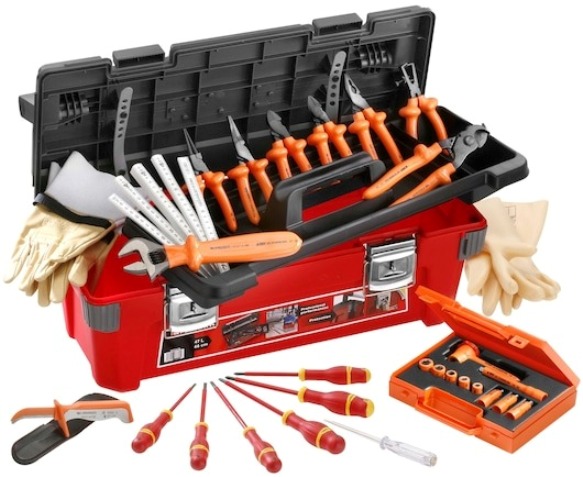
Expert Analysis – Why FACOM Tools Matter in Nigeria’s Industrial Environment
After working for more than 15 years in industrial tooling, MRO consulting, automotive workshops, and heavy-duty maintenance environments, one thing has become very clear to me:
tools don’t fail on paper — they fail on shop floors.
This is especially true in markets like Nigeria, where operating conditions are tough, timelines are tight, and tool failure doesn’t just slow work down — it creates safety risks and financial loss.
This article explains FACOM tools not as a brand name, but as a working solution in real Nigerian industrial conditions.
What FACOM Tools in Nigeria Actually Represent in Real Use
FACOM is often described as a “premium European tool brand.”
That description is technically correct — but practically incomplete.
From my experience over the past decade and a half, FACOM tools are engineered with a very specific mindset:
they are designed assuming human error, harsh handling, and long duty cycles.
Most generic tools are designed to pass a strength test once.
FACOM tools in nigeria are designed to repeat the same performance thousands of times without unpredictable failure.
In real-world usage, this means the tool behaves consistently even when:
- Technicians change,
- Working hours increase,
- Environmental conditions worsen.
This predictability is the foundation of professional tooling — and it’s something low-cost tools simply don’t deliver.
Why Tool Quality Is a Bigger Issue in Nigeria Than in Many Other Markets
Nigeria’s industrial environment is unforgiving, and this reality is rarely acknowledged in generic blogs.
High ambient temperatures affect steel hardness.
Humidity accelerates corrosion.
Power instability forces manual torque and improvisation.
Skill variability increases the chances of over-torquing and misuse.
What most blogs don’t tell you is this:
cheap tools don’t just wear out faster in Nigeria — they fail unpredictably.
Unpredictable failure is the worst type of failure.
It leads to sudden tool breakage, damaged fasteners, injured technicians, and costly downtime.
FACOM tools are engineered to fail progressively, not catastrophically.
Steel composition, heat treatment, and design tolerances ensure that the tool shows signs of stress before it becomes dangerous.
That difference alone makes FACOM tools far more suitable for Nigerian industrial use.
FACOM Automotive Tools: Why Accuracy Matters More Than Strength
In automotive and fleet maintenance, the biggest misconception is that “tight is tight enough.”
In real-world workshops, incorrect torque is one of the most common hidden causes of:
- Premature component failure,
- Vibration-related breakdowns,
- Warranty rejections.
From my on-ground experience, the problem is rarely the technician — it’s usually the tool.
FACOM automotive tools are built to maintain consistent grip geometry and torque accuracy over long usage periods.
This consistency ensures that whether the job is done today or six months later, the result is mechanically identical.
For commercial workshops and fleet operators in Nigeria, this repeatability directly translates into fewer comebacks, lower liability, and higher customer trust.
FACOM Torque Tools: From a Tool to a Compliance Instrument
Torque tools are not just mechanical devices — they are accountability instruments.
In audits, accident investigations, and warranty disputes, torque accuracy becomes a documented requirement, not an assumption.
In my consulting work, I’ve seen companies fail audits simply because torque tools could not prove calibration stability.
FACOM torque tools are designed to retain calibration for longer periods under real working conditions.
Their internal mechanisms are engineered to reduce drift, false clicks, and spring fatigue.
This matters in Nigeria’s oil & gas, power, and infrastructure sectors, where compliance standards are tightening and documentation is no longer optional.
Using a certified, stable torque tool is no longer about best practice — it’s about operational protection.
Industrial Hand Tools: The Steel Quality Most Buyers Never Evaluate
Most buyers evaluate tools visually.
Professionals evaluate tools metallurgically — even if subconsciously.
Cheap tools often use inconsistent steel batches, leading to:
- Uneven hardness,
- Micro-fractures,
- Jaw misalignment over time.
FACOM uses controlled alloy compositions and disciplined heat treatment processes.
The result is steel that behaves predictably under load.
In practice, this means:
- Spanners deform slightly before failure instead of snapping,
- Pliers maintain jaw alignment after repeated stress,
- Screwdriver tips retain shape under torque.
This predictability reduces accidents, improves work speed, and builds technician confidence — an underrated but critical factor in productivity.
The Real Cost Equation: Why FACOM Tools in Nigeria Often Save Money
Many procurement decisions fail because they focus only on purchase price, not ownership cost.
A cheaper tool may cost less upfront but requires:
- Frequent replacement,
- Inconsistent performance,
- Additional downtime.
FACOM Tools in Nigeria typically last several years in continuous industrial use.
When downtime, replacement logistics, and operational disruption are considered, the total cost of ownership is often significantly lower.
From long-term observations across workshops and plants, FACOM tools frequently deliver 30–40% cost efficiency over a 3–5 year cycle, despite higher initial pricing.
This is not marketing math — it’s operational math.
Counterfeit Tools in Nigeria: A Risk That Cannot Be Ignored
Nigeria faces a serious challenge with counterfeit professional tools, and FACOM is no exception.
Fake tools may look identical but fail internally:
- Weak springs in torque tools,
- Poor steel composition,
- Inaccurate dimensions.
I have personally encountered cases where counterfeit tools caused assembly failures and safety incidents.
This is why sourcing from trusted, accountable suppliers is critical.
Platforms like brookindustrialtools.com play an important role by ensuring authenticity, correct specifications, and traceability.
Buying genuine tools is not about brand loyalty — it’s about risk control.
Global Standards, Local Application
Globally, FACOM tools are used in aerospace, OEM manufacturing, and high-compliance industries.
Nigeria’s industrial ecosystem is steadily moving toward those same standards.
As audits, safety expectations, and reliability benchmarks increase, tool quality will no longer be optional.
Organizations that align early with professional-grade tools will adapt faster and operate more confidently.
Final Expert Perspective
After 15+ years of hands-on exposure to real industrial environments, my conclusion is straightforward:
FACOM tools are not premium because of branding — they are premium because of predictability, safety, and long-term reliability.
In Nigeria’s evolving industrial landscape, these factors will increasingly define who succeeds and who struggles.
This is not a short-term decision.
It’s a structural one.